
There’s always another quarterback hope to tempt, tantalize, torture and polarize Browns fans.
Now you might add Brendan Sorsby to the list.
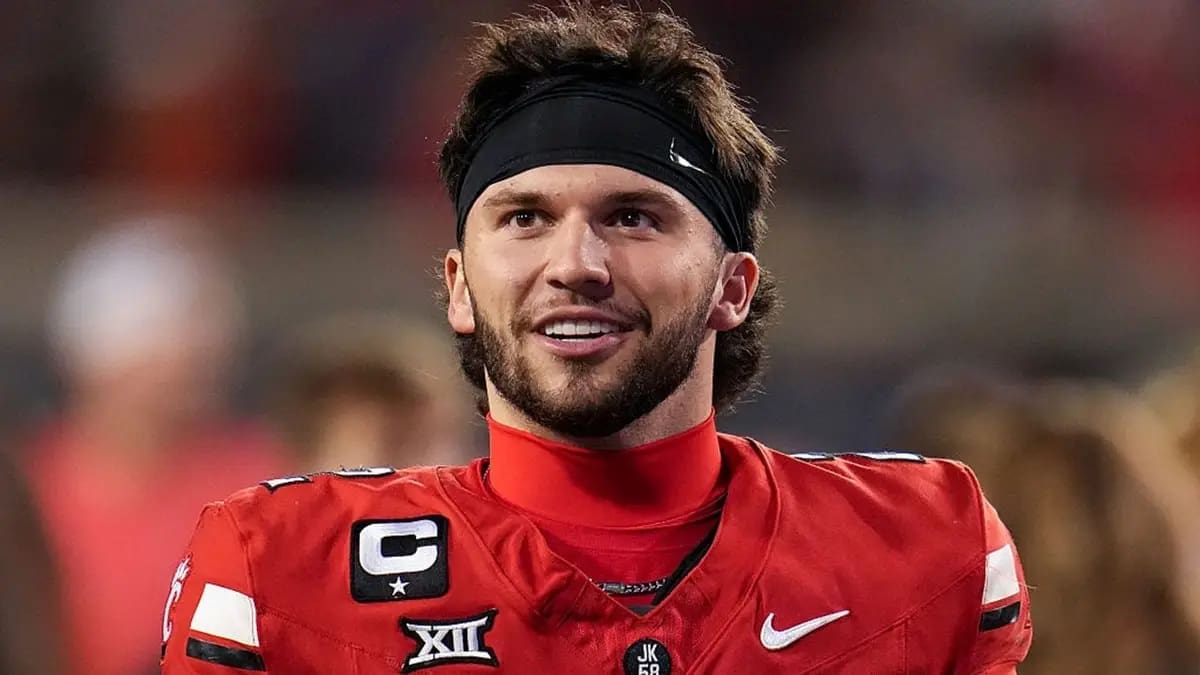
Sorsby, 22, is the talented, physical (6-3 and 235 pounds) and controversial Texas Tech quarterback contemplating an end run to the NFL via the seldom-used supplemental draft.
In the event that happens sometime in July, NFL teams are doing their homework in sizing up Sorsby as a quarterback prospect. The Browns are among those teams putting in work on Sorsby, according to a source.
ESPN reported Sorsby is being investigated by Indiana and Ohio gaming commissions, in addition to the NCAA, for allegedly betting on college football games during his years enrolled at Indiana (2022-23) and Cincinnati (2024-25).
In a story reported by ESPN’s David Purdum, multiple sources described Sorsby as a “high-volume, low-stakes” bettor, using multiple betting accounts under multiple names.
The NCAA prohibits student-athletes from betting on college or NFL games. It could rule him permanently ineligible before the coming season.
Texas Tech recently announced that Sorsby entered a rehabilitation center for gambling addiction.
Remember the supplemental draft?
In the meantime, Sorsby reportedly hired attorney Jeffrey Kessler, a long-time NFL courtroom nemesis, to help him fight for his college eligibility or, if needed, navigate a path to the NFL.
That’s where the supplemental draft comes in.
The NFL supplemental draft, first implemented in 1977, is a draft for players who become eligible for the NFL – or lose their college eligibility – after the regular NFL draft. Players have to apply for admission; it’s not automatic.
Bernie Kosar famously made the supplemental draft his route to the NFL and Cleveland in 1985 when he outfoxed the NFL by taking advantage of a loophole discovered and researched by his advisor, his family and the Browns.
Kosar was scheduled to graduate from Miami after the regular draft in April. So he opted not to enter the regular draft and then applied in July for the supplemental draft. By then, the Browns had maneuvered a trade with Buffalo to earn the top pick in the supplemental draft.
Houston and Minnesota, which had orchestrated a trade of their own to put the Vikings in position to draft Kosar, led a chorus of outraged teams that protested to Commissioner Pete Rozelle. It was a giant cause celebre that even unnerved Browns owner Art Modell, who was still regarded as a league kingpin at the time.
Reps from all the teams involved converged on NFL headquarters to plead their case to Rozelle. Ultimately, Rozelle ruled Kosar was in the unique position to choose which draft he preferred to enter.
But before Kosar made his decision, Rozelle allowed the Vikings five days to “recruit” Kosar to their team. Hall of Fame coach Bud Grant wasn’t able to sway Kosar, however, and Kosar chose to enter the supplemental draft and play for the Browns.
The rules of the supplemental draft have been changed several times since then.
Now, instead of following the most recent draft order, the order is determined by a lottery system. Teams are divided into three groups – teams with six or fewer wins the previous season, the rest of the non-playoff teams, and the 14 teams from the playoffs.
The order of each group is selected randomly. If a team wants the player, it submits a secret bid of what round it would take the player. The team with the highest draft order and highest bid is awarded the player and must forfeit its corresponding pick in the 2027 draft.
Why would the Browns be interested?
Over his last two seasons at Cincinnati, Sorsby completed 62.9 percent of his passes for 5,613 yards and 45 touchdowns v. 12 interceptions. He also rushed for 1,027 yards and 18 touchdowns. The Bearcats were 12-12 in Sorsby’s 24 starts.
As a result, Sorsby was the prize QB of the college football transfer portal. He reportedly received an NIL deal of up to $6 million to transfer to Texas Tech in January.
According to The Athletic draft guru Dane Brugler, Sorsby would have been QB3 in the 2025 draft class after Fernando Mendoza and Ty Simpson, and projected in the second or third round. Brugler added in a text, “[Sorsby] had a chance to be a clear first [round pick] with a strong 2026 at TT.”
That’s the rub. If Sorsby loses his eligibility and has to leave for the NFL early, he won’t be the same prospect now as he could be in 2027 after another college season.
However, the Browns might not be in position high enough in the 2027 draft order to select a quarterback of Sorsby’s stature. So taking a chance on him a year early at the cost of, say, a second-round pick in 2027 might be a shortcut worth researching.
In 2012, the Browns under then-GM Tom Heckert took such a chance on wide receiver Josh Gordon, who had been suspended by Baylor for the entire 2011 season because of a positive drug test.
Heckert forfeited a second-round pick to select the athletically gifted Gordon in the 2012 supplemental draft and signed him to a four-year, $5.3 million deal. Gordon had 50 receptions as a 21-year-old rookie and then led the NFL in his second season with 1,646 receiving yards and nine TDs on 87 receptions.
That was as good as it got, of course.
Gordon suffered addiction problems resulting in multiple NFL suspensions. The Browns released him in the 2018 season. Gordon went on to play for the Patriots, Seahawks, Chiefs and Titans and then in the XFL. Gordon officially retired from football in 2024 at the age of 33.
There is a chance that even if Sorsby is admitted to the supplemental draft he could face NFL discipline, pending the outcome of the gambling investigations.
When former Ohio State quarterback Terrelle Pryor entered the NFL through the 2011 supplemental draft, it came with a five-game NFL suspension as a result of taking improper benefits at OSU.
Sorsby’s case is more complicated because of the gambling allegations. But that isn’t stopping NFL teams from doing their research.